Business Development Intern – 90 Day Door & Phone Sprint
Help identify and contact local businesses, community groups, and property owners. Learn how real outbound sales and partnerships work in […]


833 363 7442
Help identify and contact local businesses, community groups, and property owners. Learn how real outbound sales and partnerships work in […]
Knock doors, make calls, and build your own pipeline (no sitting back waiting for leads). Represent a high‑value Home Power
Close inbound roofing leads and actively prospect like our direct solar reps. Build and train a small team of reps
 REQUEST RECEIVED
We’ve received your information and started reviewing your home.
Thanks for trusting Ecoloop. Here’s what happens next:

A local Ecoloop specialist will review your roof, bill, and utility details.

We’ll build a custom Home Power Plan with clear numbers in writing.

We’ll reach out within the next 24 hours for a quick, no-pressure walkthrough.
You’ll see exactly what solar could do for your home, with real numbers you can compare to your current electric bill.
Pick a time that works for you. We’ll walk through your options in 15–20 minutes.
 100% Free & No-Obligation
With a PPA, maintenance and monitoring are included for the term: the PPA provider and EcoLoop are responsible for keeping the system running. For owned systems:
We also provide maintenance and repair services to solar systems installed by other companies, our goal is to bring your solar system back to life in no time.
Most systems come with:
For PPAs, there is usually a production guarantee: if the system underperforms vs the promised output, you receive credits or compensation per the agreement. At the end of a PPA term, you typically can:
For PPAsWe explain your exact coverage and end‑of‑term options before you sign.
With a PPA, maintenance and monitoring are included for the term: the PPA provider and EcoLoop are responsible for keeping the system running. For owned systems:
We also provide maintenance and repair services to solar systems installed by other companies, our goal is to bring your solar system back to life in no time.
We recommend batteries when:
In Massachusetts, that full process usually takes 3–6 months depending on the city and utility. We set that expectation upfront so you’re not surprised.
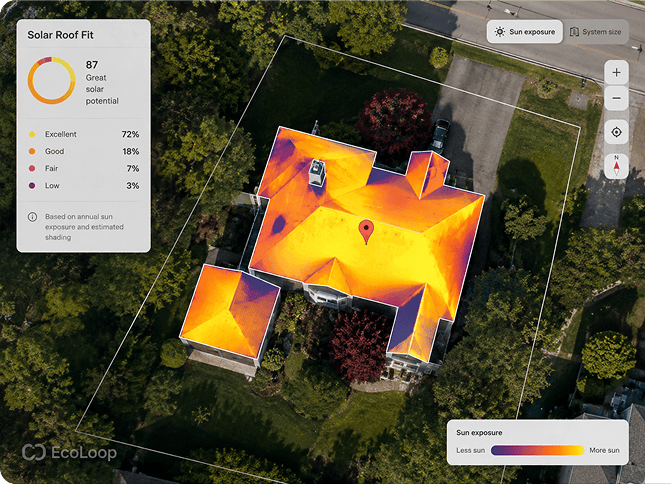
Before we recommend a system, we check:
We size the system around your 12 months of past usage plus future plans (EVs, hot tubs, additions) so you’re not under‑ or over‑building.

We recommend batteries when:
Batteries are quoted separately and can be:
Ecoloop works a solar broker and is able to offer every option under the sun:
We act as a broker, not a captive lender, so we can show multiple options and explain any dealer fees or escalators before you sign. Your Home Power Plan lays this out side by side.
Incentives are real, but they usually don’t show up as a check in your mailbox. Instead:
When roof work, tree removal, or panel upgrades are needed, we often structure the project so incentive value and PPA economics help make those upgrades affordable in a single plan.
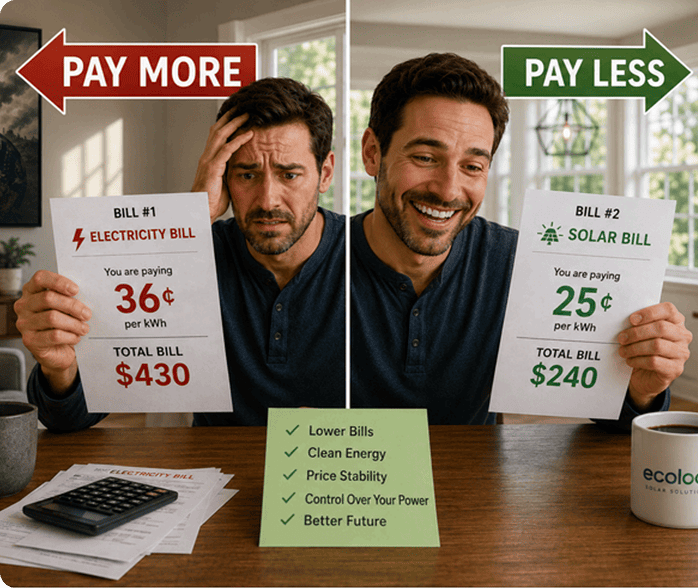
We look at your actual bill and compare:
In Massachusetts, it’s common to be paying $0.30–0.40+ per kWh to the utility. A well‑structured solar plan or PPA usually drops your effective rate and locks it in, which is why:
Your Home Power Plan shows 25‑year side‑by‑side numbers so you can see total savings, not just one monthly payment.
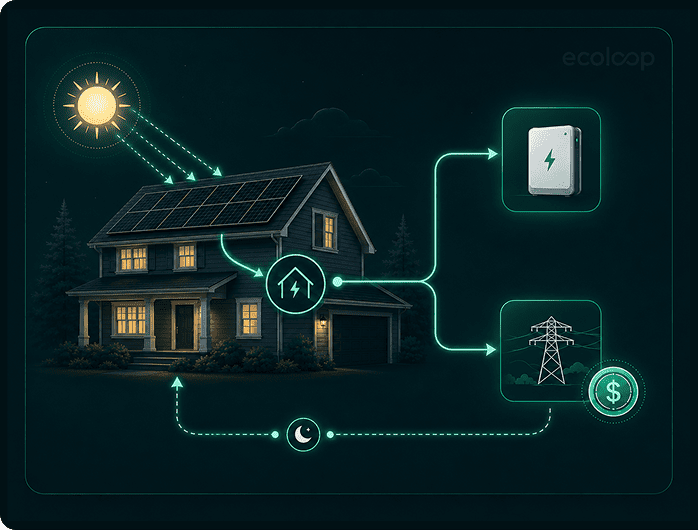
Solar panels on your roof turn sunlight into DC electricity. Inverters convert that into AC power your home can use. Your home uses solar power first. If you’re producing more than you’re using, the extra energy either:
At night or on cloudy days, you pull power from the grid as usual, but your yearly bill is based on total solar production minus total usage, not just one sunny day. From the street, your house looks the same; the big change is what you pay per kWh over time.: