Ecoloop

Roofing Replacement

When It’s Time to Talk to a Roofer

Your roof is 15–20+ years old

You see missing, curling, or cracked shingles

You’ve had leaks, stains, or soft spots

You want to upgrade curb appeal before selling

You’re replacing insurance patch jobs with a full roof

You’re thinking about solar and don’t want to redo the roof later

What’s Included in a Typical Service Visit

One of America’s most popular architectural shingles, with strong warranties and style options.

Known for consistent quality and great color choices to match your home’s look.

Heavier, premium shingles for homeowners who want a long-term roof investment.

We help you choose the right shingle line and color for your home and budget. The most important thing is not just the brand — it’s expert installation, ventilation, and flashing so the roof actually lasts.

Our Roofing Process

Inspection & photos

We check your roof, ventilation, and problem areas and document everything.

Clear written quote

You get a simple scope, materials, and price — no vague line items.

Tear-off & install

We remove old materials, repair decking as needed, and install your new roofing system to manufacturer specs.

Clean-up & final walkthrough

We magnet-sweep for nails, haul away debris, and walk you through the finished roof.

Most roofs are completed in 1–2 days once scheduled, depending on size and weather.

Trusted by Homeowners. Across Massachusetts

Over 1,500 projects completed • 500+ installs last year

Frequently Asked Questions

Do you offer repairs or only full replacements?

We offer both roof repairs and full replacements.

During the inspection, we’ll evaluate the condition of your roof and explain the most appropriate solution. If a repair is reasonable, we’ll identify the affected area and provide a clear scope of work. If the roof has widespread damage or is near the end of its useful life, replacement may be the more reliable long-term option.

Our roofing projects include a 10-year roof penetration workmanship warranty.

Materials are also covered by the applicable manufacturer’s warranty, which varies from 20 to 30 years by product and manufacturer.

We’ll explain the specific labor and material warranty coverage for your project before work begins.

We can inspect your roof and provide documentation regarding its condition and any visible damage.

Insurance coverage, claim approval, and payment decisions are made by your insurance company. We recommend reviewing your policy and communicating directly with your carrier. Our team can explain the roofing scope clearly so you understand what work may be needed.

Most residential roof replacements are completed within a week once the project is scheduled.

The exact timeline depends on the roof size, materials, complexity, weather, permitting, material availability, and any repairs discovered during installation.

We’ll provide a project schedule before work begins and keep you informed if conditions require an adjustment.

Usually, you do not need to be home for the entire roof replacement.

We will coordinate access, confirm project details, and communicate the start and completion schedule with you.

You may need to be available for the initial inspection and a final walkthrough.

We can discuss a solar-ready roof if you may want solar in the future.

That means evaluating the roof structure, materials, layout, electrical considerations, and other factors that could affect a future solar installation. A solar-ready roof does not guarantee that solar will be appropriate later, since eligibility depends on the home, roof orientation, shading, utility requirements, financing, and system design.

If you are considering solar, tell us before the roofing work begins so we can evaluate both projects together.

Need Your Solar System Checked or Repaired?

Tell us what’s going on and we’ll schedule a service visit to inspect your system and get you clear answers.

    Scroll to Top

    Solar & Real Estate

    Solar can help a real estate deal when everyone understands how it works, and it can slow things down when they don’t.
    If you own the system (cash or loan):

    • The solar system is usually treated as a home improvement, like a new roof or kitchen.
    • Buyers often see lower electric bills as a plus.
    • Your agent and the buyer’s lender just need clear documentation.

    If you have a PPA:

    • The agreement transfers to the new owner, subject to approval and paperwork.
    • The buyer steps into a lower, predictable solar payment instead of paying full utility rates.
    • We help your agent and the buyer understand the terms so they’re comfortable with the transfer.

    Ecoloop can support real estate transactions by:

    • Explaining the system and agreement to agents and buyers
    • Providing clean documentation on production, payments, and warranties
    • Giving honest guidance if solar is not the right move before a sale

    Solar Warranty & Guarantees

    Most systems come with:

    • Panel production warranties (often 25 years, guaranteeing 85–90% of original output at year 25).
    • Inverter warranties (typically 10–25 years, depending on brand).
    • EcoLoop workmanship warranty, including roof penetrations.

    For PPAs, there is usually a production guarantee: if the system underperforms vs the promised output, you receive credits or compensation per the agreement. At the end of a PPA term, you typically can:

    • Have the system removed,
    • Renew the agreement, or
    • Buy the system at a pre‑defined or fair‑market value.
    • For PPAsWe explain your exact coverage and end‑of‑term options before you sign.

    Solar Maintenance

    With a PPA, maintenance and monitoring are included for the term: the PPA provider and EcoLoop are responsible for keeping the system running. For owned systems:

    • Panels generally need very little maintenance; rain and snow do most of the cleaning.
    • We recommend periodic inspections and offer service plans.
    • If there’s an issue, we diagnose it, help with equipment warranty claims, and handle repairs.

    We also provide maintenance and repair services to solar systems installed by other companies, our goal is to bring your solar system back to life in no time.

    A typical Ecoloop solar project looks like this:

    We recommend batteries when:

    • Home Power Plan consultation – We review your bill, roof, and goals.
    • Site survey – We confirm roof condition, measurements, and electrical panel details.
    • Engineering & design – We finalize your system layout and technical docs.
    • Permits & utility approvals – We submit to your town and utility.
    • Installation – Our in‑house crews install the system.
    • Inspections & PTO – The town and utility sign off and grant Permission To Operate.

    In Massachusetts, that full process usually takes 3–6 months depending on the city and utility. We set that expectation upfront so you’re not surprised.

    Panels & Roof Fit

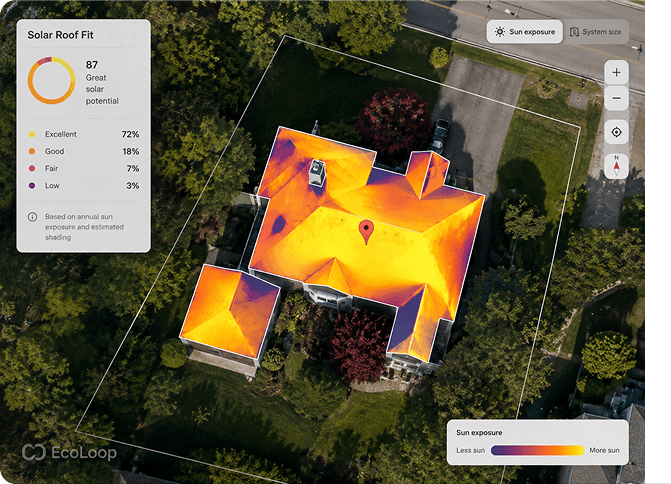
    Before we recommend a system, we check:

    • Roof orientation: South, east, and west faces are usually best.
    • Shading: Heavy tree coverage can kill production. We’ll talk honestly about tree removal or tell you if solar doesn’t make sense.
    • Roof age & condition: If the roof is near the end of its life, we’ll recommend replacing it first so you don’t pay twice.
    • Structures: Sometimes panels go on garages or other buildings if they have better sun.

    We size the system around your 12 months of past usage plus future plans (EVs, hot tubs, additions) so you’re not under‑ or over‑building.

    Solar Batteries

    We recommend batteries when:

    • You have frequent outages and want your heat, fridge, internet, or medical equipment to stay on.
    • You are concerned about future changes to your electricity plans and want to prepare.
    • You want to join programs like Connected Solutions that pay you for letting the utility use some of your stored energy during peaks.

    Batteries are quoted separately and can be:

    • Bundled into a PPA (battery + solar, $0‑down with long-term maintenance included), or
    • Financed as part of an owned system (cash/loan) so you can access battery incentives directly.

    Solar Financing Options

    Ecoloop works a solar broker and is able to offer every option under the sun:

    • $0‑down PPA: You don’t buy the system; you buy the power it produces at a lower, often fixed or capped rate for up to 25 years. Maintenance is included, and approval usually uses a soft credit check. 
    • Solar loan: You own the system, build home equity, and keep applicable incentives. There’s a monthly payment until it’s paid off.
    • Cash: Maximum long‑term savings if you want to deploy capital upfront, about a 8 year ROI.

    We act as a broker, not a captive lender, so we can show multiple options and explain any dealer fees or escalators before you sign. Your Home Power Plan lays this out side by side.

    Solar Incentives

    Incentives are real, but they usually don’t show up as a check in your mailbox. Instead:

    • For owned systems, state incentives, net metering, and tax exemptions help offset your cost over time.
    • For PPAs, the financing partner typically uses available commercial‑side federal credits and state programs, then bakes that value into your lower kWh rate and $0‑down structure.

    When roof work, tree removal, or panel upgrades are needed, we often structure the project so incentive value and PPA economics help make those upgrades affordable in a single plan.

    Solar Cost & Savings (ROI)

    We look at your actual bill and compare:

    • What you’d keep paying the utility over 25 years (at today’s rates + likely increases), vs
    • What you’d pay with a solar loan, cash purchase, or $0‑down PPA.

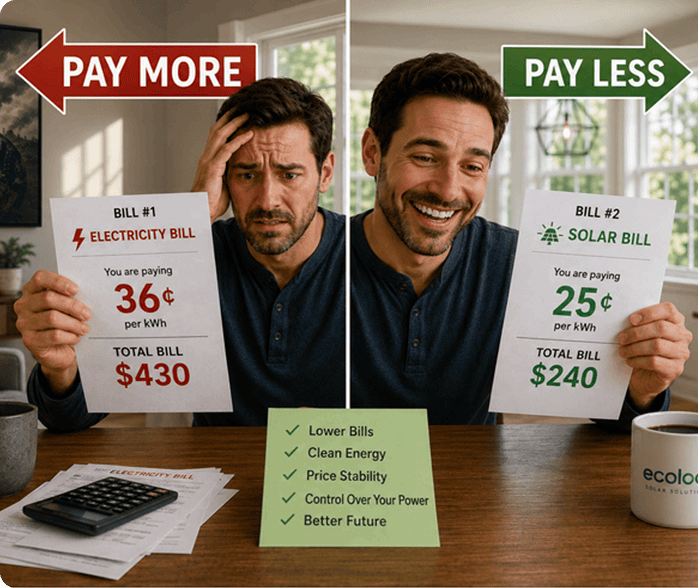
    In Massachusetts, it’s common to be paying $0.30–0.40+ per kWh to the utility. A well‑structured solar plan or PPA usually drops your effective rate and locks it in, which is why:

    • PPAs can save money immediately with no upfront cost
    • Owned systems often pay back in 8–9 years, then produce low‑cost power for decades

    Your Home Power Plan shows 25‑year side‑by‑side numbers so you can see total savings, not just one monthly payment.

    How Solar Works

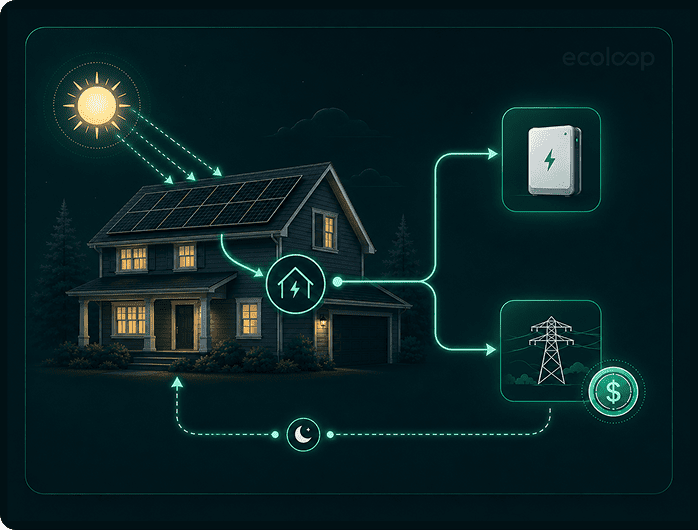
    Solar panels on your roof turn sunlight into DC electricity. Inverters convert that into AC power your home can use. Your home uses solar power first. If you’re producing more than you’re using, the extra energy either:

    • Flows back to the grid and earns you net metering credits, or
    • Charges a home battery if you have one.

    At night or on cloudy days, you pull power from the grid as usual, but your yearly bill is based on total solar production minus total usage, not just one sunny day. From the street, your house looks the same; the big change is what you pay per kWh over time.: