Ecoloop

Battery Backup

Why Add a Battery to Your Home?

Keep essential circuits running during storms and outages.

Use more of your own solar power
at night.

Protect your family’s heat, fridge, internet, and medical devices.

Qualify for Massachusetts battery incentive programs when you own your system.


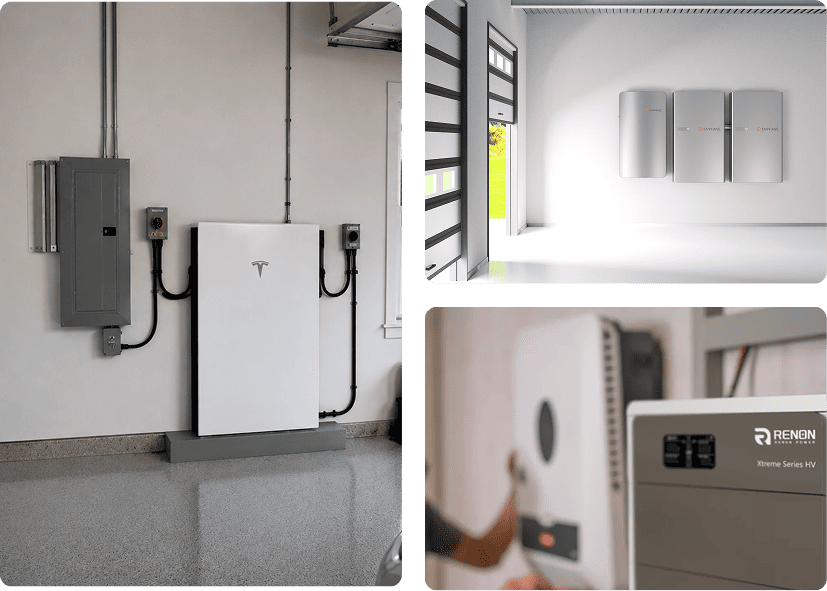
We design your battery around your home, not a one‑size‑fits‑all template.

We Work With Brands You Trust:

Two simple ways to get a battery

$0‑Down Battery with a PPA

Bundle battery with a solar PPA.

$0 upfront for equipment and install.

Predictable monthly payment instead of a big one‑time cost.You’ve had leaks, stains, or soft spots

25‑year maintenance included in the agreement.

Simplest path if you want backup power, low investment and low hassle.

Own Your Battery Outright

Buy the battery with cash or a loan.

You own the equipment and can stack incentives.

Eligible for federal tax credit and MA battery incentive programs like ConnectedSolutions.

Best long‑term upside if you’re willing to invest upfront.

In your Home Power Plan, we run both options side by side so you can see which fits your budget and goals best.

How We Design and Install Your Battery

Review your bill, roof, and panel

Design which circuits to back up and how long you want them to run

Model PPA vs purchase with incentives included

Pull permits, install, and commission your system

Enroll you in eligible incentive programs if you own the battery

We use licensed electricians and handle the permitting and inspection process required in Massachusetts.

Trusted by Homeowners. Across Massachusetts

Over 1,500 projects completed • 500+ installs last year

Frequently Asked Questions

Do I need solar to add a battery?

No. A battery can be installed as a standalone backup system, even if you do not have solar.

If you already have solar, we can review your current system, financing agreement, and energy needs to determine whether adding a battery is possible and which solution makes the most sense. Battery options may include an outright purchase or a battery PPA, depending on your situation.

Battery backup time depends on the battery’s capacity, your home’s energy usage, and which appliances you choose to power.

Most systems are designed to support your home’s critical loads, such as refrigerators, lights, internet, heating controls, medical equipment, and selected outlets. Larger energy users may require additional battery capacity or may not be included during an outage.

We will help determine the right size based on your priorities and expected energy use.

Possibly. Your options depend on the specific PPA agreement, provider, and equipment involved.

Some agreements may allow you to purchase the system, transfer the agreement, renew it, or make other changes at certain points. We will review the terms with you and explain what options are available before making a recommendation.

Your utility may be able to enroll your battery in a demand-response program, such as ConnectedSolutions. These programs may allow the utility to use some of the battery’s stored energy during certain grid events.

Participation is subject to program eligibility and the terms of your utility agreement. Ecoloop can help evaluate eligibility and assist with the setup process.

Most modern battery systems require minimal routine maintenance. They are monitored electronically and designed for automatic operation.

You should keep the area around the battery clear, avoid blocking ventilation, and contact us if you notice an alert, unusual noise, damage, or a change in performance. Depending on the system and agreement, monitoring, service, and repairs may be included.

If you own your solar system, we can evaluate whether it is compatible with battery storage and design the appropriate solution. If your solar system is financed through a PPA or lease, we first need to review the agreement and confirm whether the provider allows a battery addition.

We will check your existing equipment, agreement, electrical setup, and backup goals before recommending the next step.

Want Backup Power for Your Home?

We’ll design a custom battery plan for your home and show $0‑down PPA and ownership options side by side in your Home Power Plan.

Scroll to Top

Solar & Real Estate

Solar can help a real estate deal when everyone understands how it works, and it can slow things down when they don’t.
If you own the system (cash or loan):

  • The solar system is usually treated as a home improvement, like a new roof or kitchen.
  • Buyers often see lower electric bills as a plus.
  • Your agent and the buyer’s lender just need clear documentation.

If you have a PPA:

  • The agreement transfers to the new owner, subject to approval and paperwork.
  • The buyer steps into a lower, predictable solar payment instead of paying full utility rates.
  • We help your agent and the buyer understand the terms so they’re comfortable with the transfer.

Ecoloop can support real estate transactions by:

  • Explaining the system and agreement to agents and buyers
  • Providing clean documentation on production, payments, and warranties
  • Giving honest guidance if solar is not the right move before a sale

Solar Warranty & Guarantees

Most systems come with:

  • Panel production warranties (often 25 years, guaranteeing 85–90% of original output at year 25).
  • Inverter warranties (typically 10–25 years, depending on brand).
  • EcoLoop workmanship warranty, including roof penetrations.

For PPAs, there is usually a production guarantee: if the system underperforms vs the promised output, you receive credits or compensation per the agreement. At the end of a PPA term, you typically can:

  • Have the system removed,
  • Renew the agreement, or
  • Buy the system at a pre‑defined or fair‑market value.
  • For PPAsWe explain your exact coverage and end‑of‑term options before you sign.

Solar Maintenance

With a PPA, maintenance and monitoring are included for the term: the PPA provider and EcoLoop are responsible for keeping the system running. For owned systems:

  • Panels generally need very little maintenance; rain and snow do most of the cleaning.
  • We recommend periodic inspections and offer service plans.
  • If there’s an issue, we diagnose it, help with equipment warranty claims, and handle repairs.

We also provide maintenance and repair services to solar systems installed by other companies, our goal is to bring your solar system back to life in no time.

A typical Ecoloop solar project looks like this:

We recommend batteries when:

  • Home Power Plan consultation – We review your bill, roof, and goals.
  • Site survey – We confirm roof condition, measurements, and electrical panel details.
  • Engineering & design – We finalize your system layout and technical docs.
  • Permits & utility approvals – We submit to your town and utility.
  • Installation – Our in‑house crews install the system.
  • Inspections & PTO – The town and utility sign off and grant Permission To Operate.

In Massachusetts, that full process usually takes 3–6 months depending on the city and utility. We set that expectation upfront so you’re not surprised.

Panels & Roof Fit

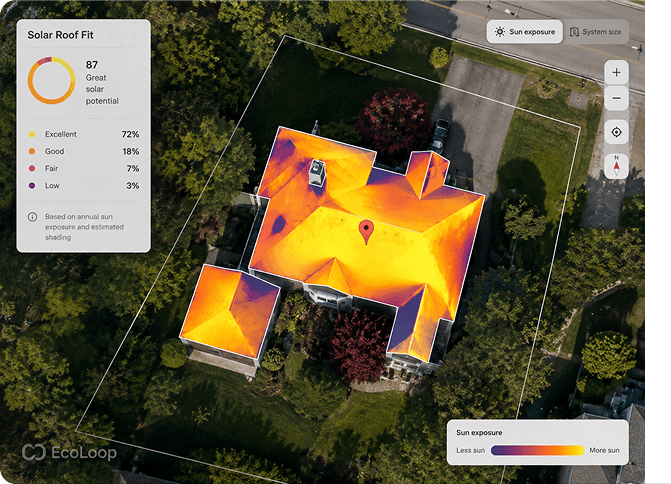
Before we recommend a system, we check:

  • Roof orientation: South, east, and west faces are usually best.
  • Shading: Heavy tree coverage can kill production. We’ll talk honestly about tree removal or tell you if solar doesn’t make sense.
  • Roof age & condition: If the roof is near the end of its life, we’ll recommend replacing it first so you don’t pay twice.
  • Structures: Sometimes panels go on garages or other buildings if they have better sun.

We size the system around your 12 months of past usage plus future plans (EVs, hot tubs, additions) so you’re not under‑ or over‑building.

Solar Batteries

We recommend batteries when:

  • You have frequent outages and want your heat, fridge, internet, or medical equipment to stay on.
  • You are concerned about future changes to your electricity plans and want to prepare.
  • You want to join programs like Connected Solutions that pay you for letting the utility use some of your stored energy during peaks.

Batteries are quoted separately and can be:

  • Bundled into a PPA (battery + solar, $0‑down with long-term maintenance included), or
  • Financed as part of an owned system (cash/loan) so you can access battery incentives directly.

Solar Financing Options

Ecoloop works a solar broker and is able to offer every option under the sun:

  • $0‑down PPA: You don’t buy the system; you buy the power it produces at a lower, often fixed or capped rate for up to 25 years. Maintenance is included, and approval usually uses a soft credit check. 
  • Solar loan: You own the system, build home equity, and keep applicable incentives. There’s a monthly payment until it’s paid off.
  • Cash: Maximum long‑term savings if you want to deploy capital upfront, about a 8 year ROI.

We act as a broker, not a captive lender, so we can show multiple options and explain any dealer fees or escalators before you sign. Your Home Power Plan lays this out side by side.

Solar Incentives

Incentives are real, but they usually don’t show up as a check in your mailbox. Instead:

  • For owned systems, state incentives, net metering, and tax exemptions help offset your cost over time.
  • For PPAs, the financing partner typically uses available commercial‑side federal credits and state programs, then bakes that value into your lower kWh rate and $0‑down structure.

When roof work, tree removal, or panel upgrades are needed, we often structure the project so incentive value and PPA economics help make those upgrades affordable in a single plan.

Solar Cost & Savings (ROI)

We look at your actual bill and compare:

  • What you’d keep paying the utility over 25 years (at today’s rates + likely increases), vs
  • What you’d pay with a solar loan, cash purchase, or $0‑down PPA.

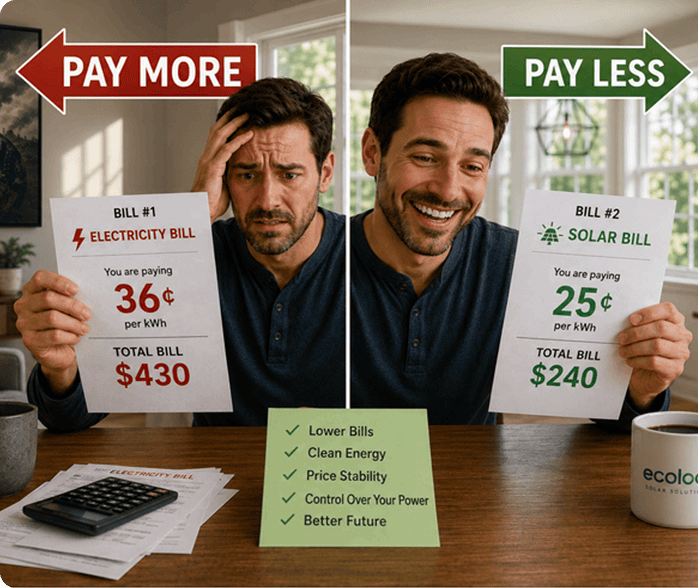
In Massachusetts, it’s common to be paying $0.30–0.40+ per kWh to the utility. A well‑structured solar plan or PPA usually drops your effective rate and locks it in, which is why:

  • PPAs can save money immediately with no upfront cost
  • Owned systems often pay back in 8–9 years, then produce low‑cost power for decades

Your Home Power Plan shows 25‑year side‑by‑side numbers so you can see total savings, not just one monthly payment.

How Solar Works

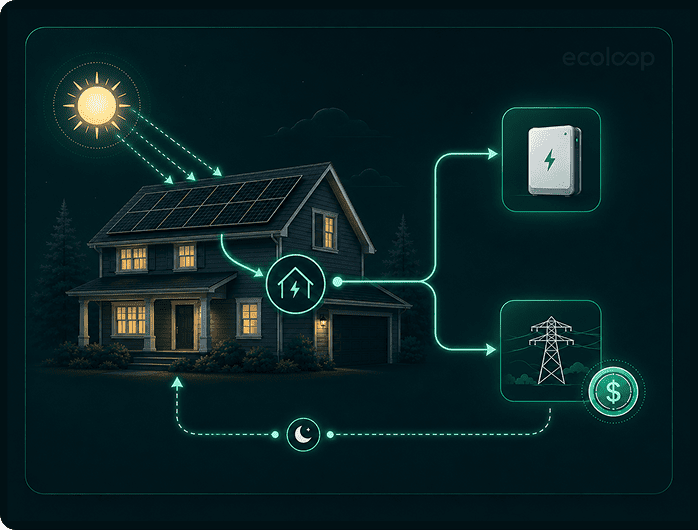
Solar panels on your roof turn sunlight into DC electricity. Inverters convert that into AC power your home can use. Your home uses solar power first. If you’re producing more than you’re using, the extra energy either:

  • Flows back to the grid and earns you net metering credits, or
  • Charges a home battery if you have one.

At night or on cloudy days, you pull power from the grid as usual, but your yearly bill is based on total solar production minus total usage, not just one sunny day. From the street, your house looks the same; the big change is what you pay per kWh over time.: